Meet the Atlantic Puffin
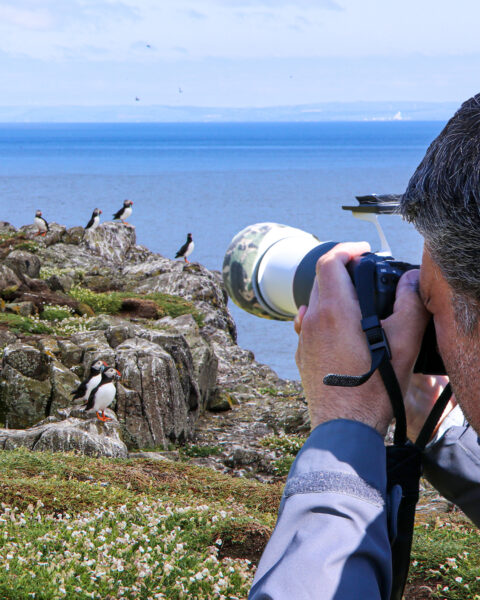
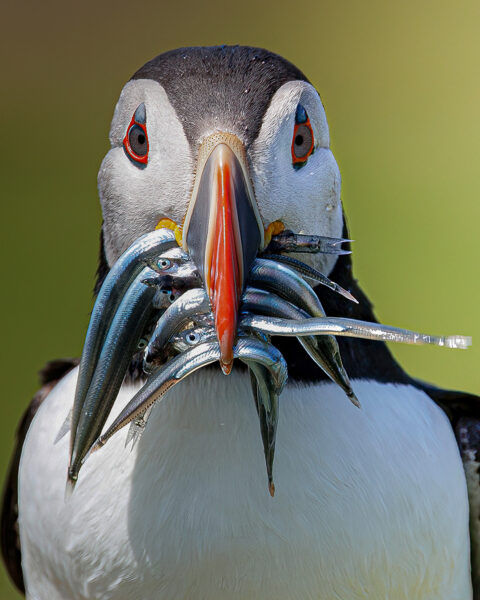
The Atlantic Puffin (Fratercula arctica) is one of the most charismatic seabirds in the North Atlantic, instantly recognizable by its bright, parrot-like bill, bold black-and-white plumage, and unmistakable “clown-like” expression. But beyond the looks, puffins are highly specialized seabirds.
They spend most of their lives at sea, returning to land only during the breeding season, from roughly April to August. During this time, they form dense colonies on remote islands and coastal cliffs, where they nest in burrows dug into soft soil or tucked between rocks.
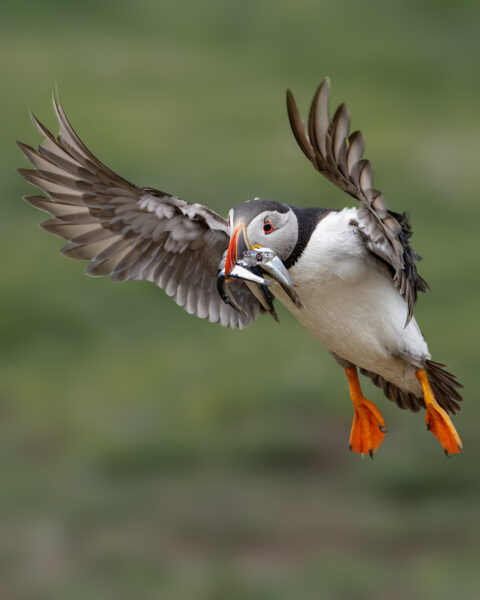
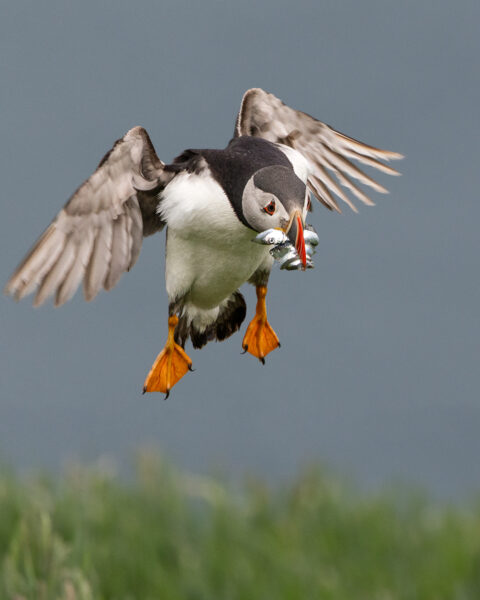
One of their most fascinating adaptations is their ability to carry multiple fish at once, often sand eels, held crosswise in their beak using a specialized tongue and spines along the bill. This behavior alone makes them a dream subject for wildlife photography.
Why Puffins Come to these Islands
I have photographed Atlantic Puffins on the Isle of May and Treshnish Isles in Scotland, as well as on Skomer Island in Wales, and all three locations offer outstanding conditions for observing and capturing these birds.
Puffins choose islands like these for very specific ecological reasons:
- Predator-free environments that protect them from land-based threats
- Soft ground that allows easy excavation of nesting burrows
- Rich surrounding waters with abundant small fish
- Remote locations with minimal human disturbance
This combination creates an ideal breeding habitat and at the same time offers some of the best puffin photography opportunities in Europe.
Isle of May – Controlled Access, Close Encounters
The Isle of May, located in the Firth of Forth, is one of the most accessible puffin colonies in Scotland and was one of the first places where I was able to photograph puffins extensively.
What makes it particularly appealing for photographers:
- Puffins are remarkably tolerant of humans
- Eye-level photography is possible in many areas
- Clearly defined paths allow close access without disturbance
- A mix of grassy slopes, rocky ledges, and coastal backdrops
This location is ideal for clean and intimate portraits as well as behavioral shots near burrows.
Treshnish Isles (Lunga) – Wild, Immersive, Photogenic
The Treshnish Isles, especially the island of Lunga, offer a more remote and immersive experience. I have also spent time photographing puffins here, and the difference in atmosphere compared to the Isle of May is immediately noticeable.
Here, puffins are constantly present:
- Walking close by and often approaching naturally
- Landing just a few meters away
- Frequently commuting between sea and colony
From a photography perspective, Lunga is especially strong in:
- Flight photography with incoming birds carrying fish
- Dynamic colony scenes with constant movement
- Natural, untouched backgrounds
- Excellent light conditions during longer stays
The experience feels less structured, which allows for more natural and dynamic imagery.
Skomer Island – One of Europe’s Largest Puffin Colonies
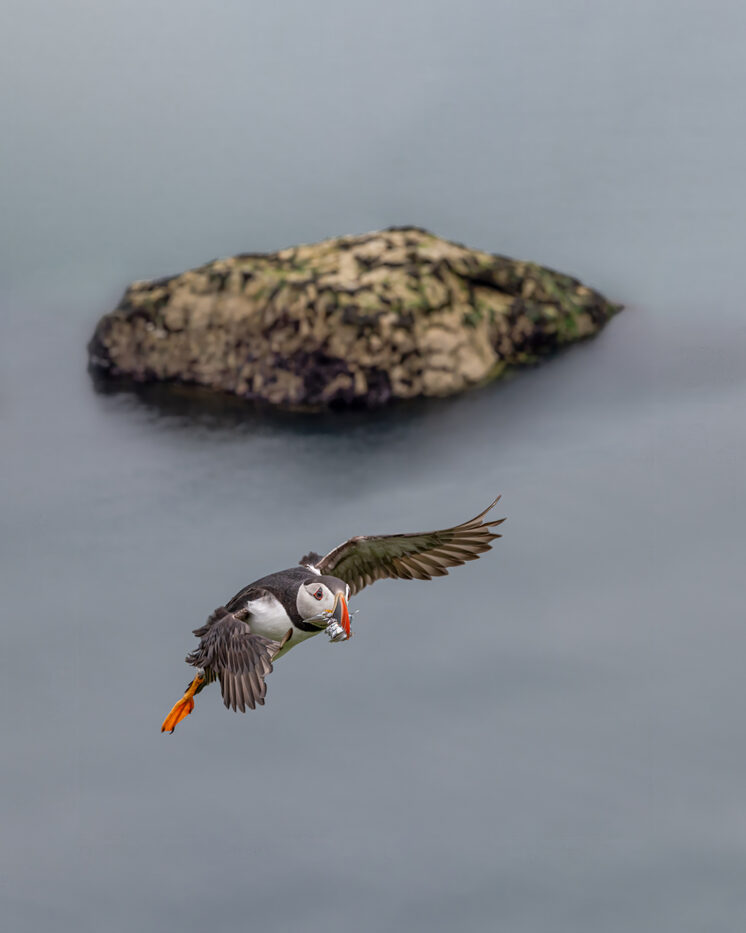
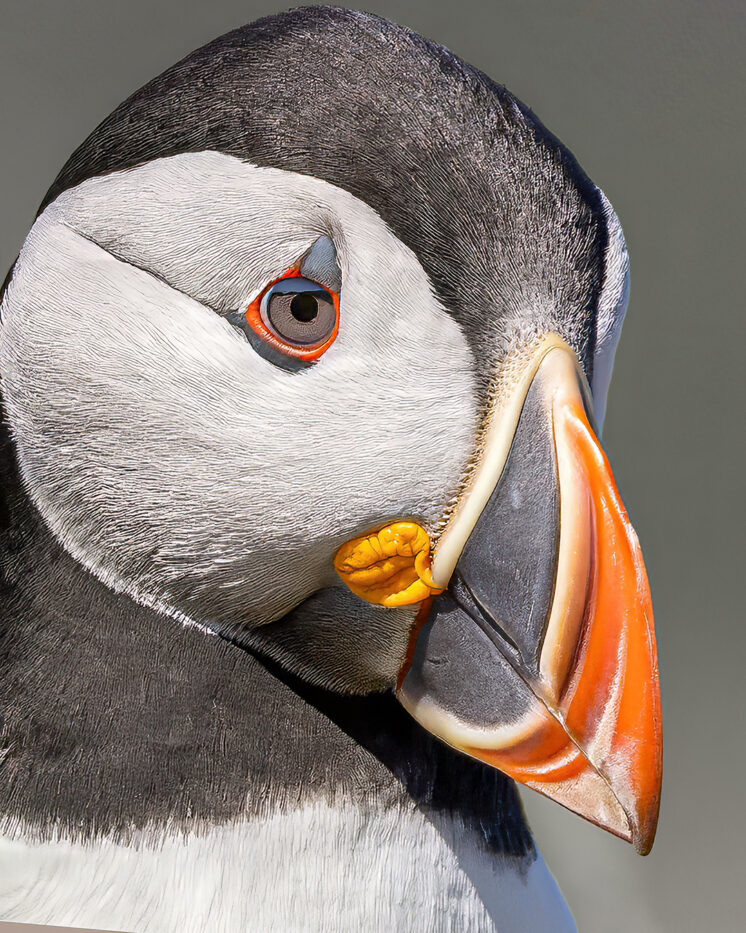
Skomer Island, off the coast of Pembrokeshire in Wales, is home to one of the largest and most famous puffin colonies in Europe. I have also photographed puffins here, and Skomer brings its own distinct character compared to the Isle of May and Treshnish Isles.
What stands out most on Skomer:
- Sheer number of puffins, with tens of thousands present during peak season
- Dramatic clifftop scenery combined with open grassy plateaus
- Puffins nesting right alongside the main paths, allowing close observation
- A wide variety of behaviors visible in a single visit, from burrow activity to social interactions
From a photography perspective, Skomer is particularly rewarding for:
- Wide-angle environmental shots that capture both puffins and the dramatic landscape
- Documenting large-scale colony dynamics and density
- Capturing interactions between individual birds
- Soft, often overcast light that works beautifully for detailed plumage shots
The sheer scale of the colony makes Skomer feel different again, offering a balance between the intimacy of the Isle of May and the wild immersion of Lunga.
Why Puffins Are Perfect Photography Subjects
- Predictable behavior during the breeding season
- High activity levels with constant movement
- Strong visual appeal through color and contrast
- Opportunities for both action and minimalistic compositions
Few species offer such a reliable combination of accessibility and visual impact.
If you’d like to see more puffin photos, please visit my Instagram account @andreas.wildlife.photos.